If you are reading this from a relative's spare room in Accra, a rented apartment in Bogotá, or a house in Port-au-Prince you moved into because you thought you would be there three weeks and it has now been seven months, start here.
On August 21, 2026, Judge Jeannette A. Vargas of the United States District Court for the Southern District of New York vacated the State Department policy that froze immigrant visa issuance for nationals of 75 countries. The case is Catholic Legal Immigration Network, Inc. v. Rubio, No. 26-CV-00858 (S.D.N.Y.), and the ruling is Docket Entry 83.
The policy is gone. Your visa is not automatically approved. Both of those sentences are true at the same time, and almost every question worth asking lives in the distance between them.
What the policy was
On January 14, 2026, the State Department announced that effective January 21 it would pause all immigrant visa issuance to nationals of 75 countries, on the theory that immigrants from those countries were at high risk of using public benefits or becoming a public charge. That same day, Secretary of State Marco Rubio sent a cable to every diplomatic and consular post ordering officers to carry it out.
The cable is the part that matters. It told consular officers to keep interviewing people, keep evaluating them, and then refuse them anyway. If an officer reviewed an applicant and found no ground of ineligibility at all, the officer was ordered to write case notes and refuse the applicant under section 221(g) of the Immigration and Nationality Act, 8 U.S.C. § 1201(g). If an officer refused someone as a public charge and that person then produced evidence overcoming the finding, the officer was ordered to refuse them under 221(g) instead. There was no version of the interview where a national of a designated country walked out with a visa.
The cable went further than that. It instructed posts to reopen cases where the applicant had already been approved but the printed visa had not yet left the consulate, refuse those applications under 221(g), and tell the applicant that additional administrative processing was needed. People whose visas were, in the most literal sense, already printed and sitting in a drawer were pulled back and refused.
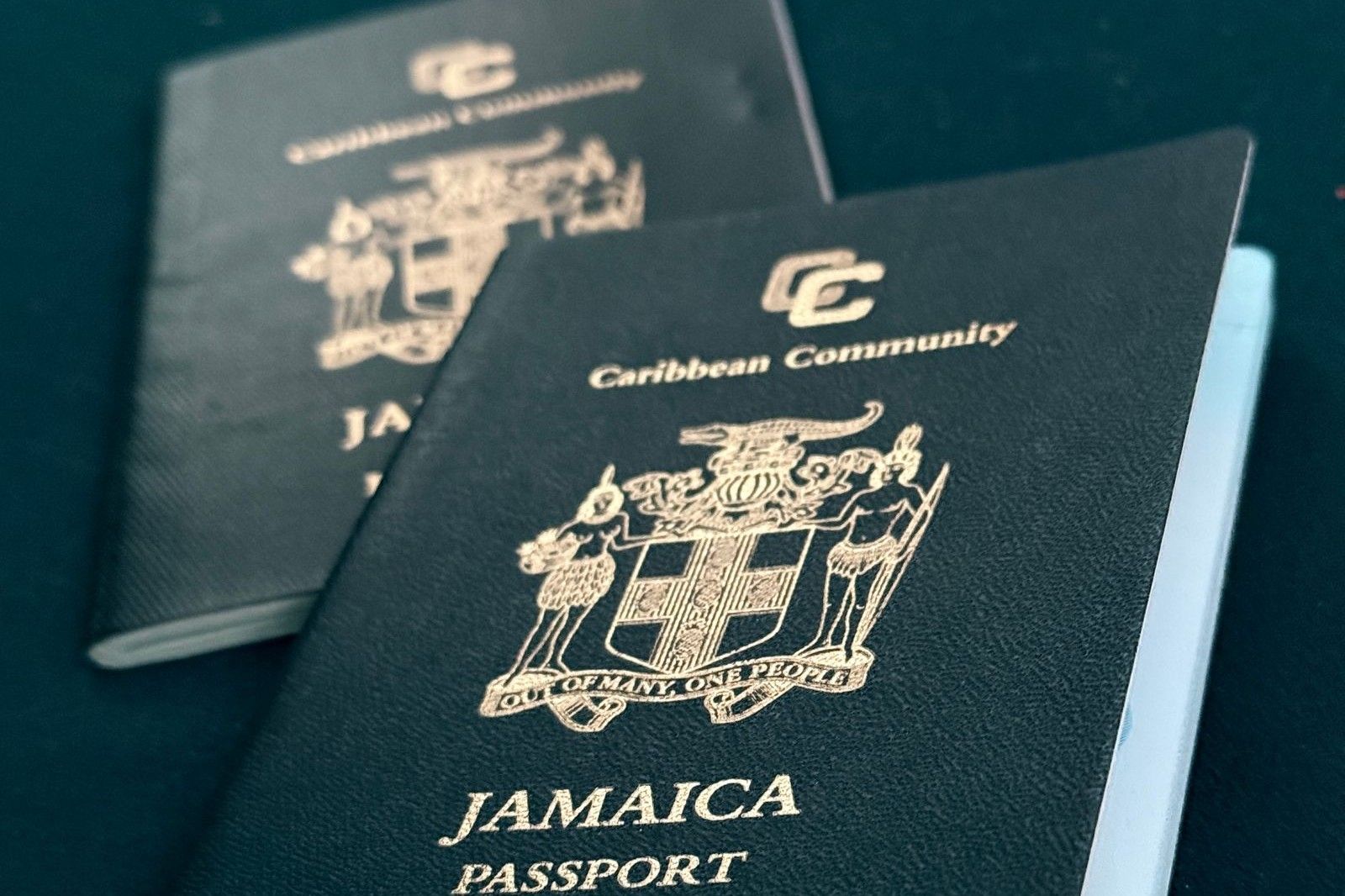
The 75 countries were Algeria, Cameroon, Cape Verde, Côte d'Ivoire, the Democratic Republic of the Congo, Egypt, Eritrea, Ethiopia, The Gambia, Ghana, Guinea, Liberia, Libya, Morocco, Nigeria, the Republic of the Congo, Rwanda, Senegal, Sierra Leone, Somalia, South Sudan, Sudan, Tanzania, Togo, Tunisia, and Uganda in Africa; Antigua and Barbuda, the Bahamas, Barbados, Belize, Brazil, Colombia, Cuba, Dominica, Grenada, Guatemala, Haiti, Jamaica, Nicaragua, Saint Kitts and Nevis, Saint Lucia, Saint Vincent and the Grenadines, and Uruguay in Latin America and the Caribbean; Afghanistan, Bangladesh, Bhutan, Iran, Iraq, Jordan, Kuwait, Lebanon, Nepal, Pakistan, Syria, and Yemen across the Middle East and South Asia; Albania, Armenia, Azerbaijan, Belarus, Bosnia and Herzegovina, Georgia, Kazakhstan, Kosovo, the Kyrgyz Republic, Moldova, Mongolia, Montenegro, North Macedonia, Russia, and Uzbekistan across Europe and Eurasia; and Burma, Cambodia, Fiji, Laos, and Thailand in Asia and the Pacific.
That is roughly forty percent of the countries on earth.
What the court held
Judge Vargas found three separate legal defects, and it is worth understanding each one, because they determine how much room the State Department has to try again.
First, the policy discriminated on the basis of nationality in the issuance of immigrant visas, which 8 U.S.C. § 1152(a)(1)(A) flatly prohibits. Congress wrote that provision in 1965, alongside the Civil Rights Act and the Voting Rights Act, for the specific purpose of ending the national origins quota system. The government argued that a nationality bar is permissible so long as a consular officer is the one who carries it out. The court answered that the statute says no person shall be discriminated against in the issuance of an immigrant visa because of nationality, and that who performs the discrimination and how it is effectuated is of no moment.
Second, the policy forced consular officers to refuse visas under 221(g) to applicants they had already determined were eligible. Section 1201(g) authorizes refusal only where the officer finds the applicant ineligible or the application defective, and 22 C.F.R. § 40.6 provides that a visa may be refused only on a ground specifically set out in law or regulation. The government's answer was that because the refusal was nominally issued under an existing statutory provision, it satisfied the regulation. The court called this an exercise in Orwellian logic.
Third, the policy exceeded Secretary Rubio's authority. Section 1104(a) of the INA charges the Secretary of State with administering the immigration laws as they relate to consular officers, with one express carve-out: the powers relating to the granting or refusal of visas. Congress deliberately walled the Secretary off from visa adjudications. Ordering officers that they must refuse an entire class of applicants is exactly the thing that statute forbids.
The remedy follows from the holdings. The court vacated the policy itself, and it separately set aside every immigrant visa refusal that rested solely on the policy, remanding those applications to consular officers for adjudication. When the government argued that relief should be limited to the plaintiffs who sued, the court pointed to Trump v. CASA, 606 U.S. 831 (2025), where the Supreme Court restricted universal injunctions but said in footnote 10 that its holding did not reach vacatur of agency action under the Administrative Procedure Act. Vacatur nullifies the policy for everyone, not only for the people whose names are on the complaint.
What the ruling does not do
This is the part that matters most if you are the one waiting.
The ruling does not grant anyone a visa. The court remanded the vacated refusals to consular officers and said plainly that it was not directing any particular outcome or process, so long as the refusal is not based on the policy. A consular officer can still refuse you for a criminal ground, a fraud or misrepresentation ground, a security ground, or an individualized public charge finding. What you get back is the chance to be judged on your own facts, which is what you were entitled to all along.
The ruling does not set aside every refusal that mentioned the policy. The court was explicit on this. If a consular officer found you ineligible under 8 U.S.C. § 1182(a) or another provision of law, that refusal stands, even if the refusal notice also cited the policy. Only refusals resting solely on the policy were vacated. If you were refused, the first thing to determine is which kind of refusal you actually received.
The ruling did not hold that the policy violated the public charge statute. Plaintiffs argued that it did, and the court disagreed. Because the cable told officers to keep making individualized public charge assessments, the court found the policy did not displace the framework in 8 U.S.C. § 1182(a)(4). The separate State Department public charge rules issued in November 2025 were not before the court and remain in place. An aggressive individualized public charge regime is still operating, and the government retains the ability to press it.
The ruling did not require notice and comment. Plaintiffs also argued that the State Department had to go through rulemaking before adopting the policy, and on that claim the government won. Judgment on that count was entered for the State Department. In practical terms, nothing procedural stands between the State Department and a new attempt at a differently constructed policy.
The ruling does not touch nonimmigrant visas. Tourist visas, student visas, work visas, and fiancé visas were never within the scope of this policy, and the ruling changes nothing about them. It also does not touch entry proclamations. The Supreme Court in Trump v. Hawaii drew a line between restricting admission at the border and restricting the issuance of visas, and section 1152(a)(1)(A) reaches only the second. That line is available to the government, and it is the most likely shape of any new restriction.
And the ruling does not give anybody back the seven months. Medical examinations expired. Police certificates expired. Children turned twenty-one. Jobs were lost. Tenants were evicted from apartments they were paying for from another continent. No court order repairs that.
Is it in effect right now
The opinion directs the Clerk to enter partial judgment under Rule 54(b) of the Federal Rules of Civil Procedure, which is the mechanism for making a decision on some claims immediately final and appealable while other claims remain pending. The docket reflects that the opinion was transmitted to the Orders and Judgments Clerk on August 21. The vacatur operates when that judgment is entered.
As of this writing, no notice of appeal and no motion to stay appears on the docket.
Do not expect consulates to move on Monday morning. A ruling in Manhattan has to travel to more than two hundred diplomatic and consular posts as a Department cable, and posts will not act until they receive instructions. That lag is normal and it is not evidence that anything has gone wrong. It is also exactly the period in which a well-documented, precisely worded inquiry from counsel is worth the most, because it puts your file in front of a specific officer with the judgment language attached rather than leaving you in a queue.
What an appeal would mean
The government has sixty days from entry of judgment to file a notice of appeal, because a federal officer is a party. Under the ordinary calendar that runs into late October 2026.

Filing an appeal, by itself, does not undo the vacatur. To put the ban back in force while an appeal runs, the government would have to ask Judge Vargas to stay her own judgment, and then ask the Second Circuit. Whether it seeks a stay, and how quickly, is the single most important thing to watch over the next several weeks.
If a stay were granted, the policy would operate again going forward. That is the risk that should drive timing decisions, and it cuts in a specific direction: the further along you are, the more valuable it is to move now. A person who is interviewed and issued a visa and admitted at a port of entry as a lawful permanent resident is in a fundamentally different position from a person who is still waiting for the consulate to reopen the file. Visas can be revoked at the Department's discretion under 22 C.F.R. § 42.82. Admission as a permanent resident cannot be undone by a cable.
The other claims in the case are still alive. The parties have to submit a joint letter by September 11, 2026 proposing how to handle them.
The scenarios
You were approved at your interview, and your visa was at the consulate when the ban took effect
One of our clients is in precisely this position. He left the United States on an approved provisional waiver, went to his interview, was found eligible, and was waiting for his passport to come back with the visa in it when January 21 arrived. Instead of a visa, the post reopened his case and refused him under 221(g), citing administrative processing. He has been outside the country ever since.
This is the strongest posture under the ruling, and it is worth being clear about why. The cable specifically directed posts to reopen approved cases whose visas had not yet left the consulate and refuse them under 221(g). A refusal issued under that instruction is, by definition, a refusal based solely on the policy, because the officer had already completed the eligibility determination and found nothing wrong. That is the exact category the court set aside.
There is a second reason this posture matters, and it concerns the provisional waiver. Under 8 C.F.R. § 212.7(e)(14)(i), an approved I-601A is automatically revoked if the State Department denies the immigrant visa application after the interview based on a finding that the person is ineligible for some reason other than unlawful presence. A 221(g) refusal issued because a cable ordered it is not a finding of ineligibility. The officer found the opposite. That is a meaningful argument that the provisional waiver survived, and it should be made in writing rather than assumed.
What to do: obtain the written refusal notice and read exactly what ground it cites. Check the case status in the Consular Electronic Application Center. Then submit a written request to the post's immigrant visa unit asking that the case be re-adjudicated under the judgment, quoting the operative language and attaching the docket entry. Confirm the status of the provisional waiver approval in writing. Get a new medical examination scheduled, because the original one has almost certainly expired and a stale medical is a common reason a re-opened case then sits. If the passport is still at the post, do not ask for it back while the case is being reconsidered.
You left the United States on an approved I-601A, interviewed, and were refused under 221(g)
Functionally the same analysis, with one difference: your eligibility determination may never have been completed, so you may have less on the record establishing that nothing else was wrong with your case. The response is to build that record now rather than waiting for the post to build it.
Assume the post will want current documents when it reopens the file. That means an updated affidavit of support with the most recent tax year, current police certificates, a current medical examination, and a passport with enough remaining validity. Assemble those before the post asks, so that reconsideration is a matter of days rather than another round of correspondence.
You have an approved I-601A and have not left the United States yet
Anyone who answers this one for you in a single sentence is not being straight with you.
Here is the structure of the risk. Under 8 C.F.R. § 212.7(e)(12), a provisional waiver does not take effect until three things happen: you depart the United States, you appear for the immigrant visa interview, and the State Department determines you are otherwise eligible for the visa in light of the approved waiver. Until all three are complete, the waiver has not taken hold. If you depart and the ban is reinstated by a stay before your case is finished, you are outside the country with an unlawful presence bar that is not yet waived in effect, and the provisional waiver process, which exists precisely so that families do not get separated during consular processing, will have delivered the separation it was designed to prevent.
The considerations that matter are the length of your appointment lead time, whether your nationality is on the list at all, whether anything in your history creates exposure beyond unlawful presence, who depends on you here, and how much financial cushion your household has if you are outside the country for a year. None of that is generic. The answer for a single applicant with a clean record and an appointment in six weeks is not the answer for a parent of three with an old arrest and no date scheduled.
What is generic is this: do not make this decision based on a headline. Make it after someone has read your file, checked your appointment posture, and told you honestly what happens in the bad version.
Your interview happened and the officer made an actual finding against you
If the officer found you inadmissible on public charge grounds under 8 U.S.C. § 1182(a)(4) and made that finding on your individual circumstances, or found any other ground of inadmissibility, this ruling does not clear it. The court expressly declined to vacate refusals where a consular officer found the applicant ineligible under section 1182(a) or another provision of law, even if the refusal notice also cited the policy.
That is a different problem and it has different tools. Under 22 C.F.R. § 42.81(e), if you present further evidence tending to overcome the ground of refusal within one year of the refusal, your case must be reconsidered, and no additional application fee may be charged. For a public charge finding, the evidence that moves the needle is documentary and specific: a joint sponsor with real income, assets you can prove, an employment offer, health insurance, education and credentials, and a clear picture of the household you are joining. For grounds that require a waiver, the path runs through an I-601 rather than through this ruling.
You never got an interview, or you are still sitting at the National Visa Center
You lost seven months of queue time and you are probably at the back of a much longer line, because posts now have to work through a backlog they were forbidden from clearing. The useful move is to make sure nothing on your side is the reason for further delay. Documentarily complete cases get scheduled; incomplete ones sit. Confirm that the National Visa Center shows your case as documentarily qualified, that your civil documents match the reciprocity requirements for your country, and that your affidavit of support reflects the most recent tax year.
You are a diversity visa selectee for fiscal year 2026
Move now, and get help this week. Diversity visa eligibility expires at the end of the fiscal year for which you were selected, and the fiscal year ends September 30, 2026. That deadline comes from the statute itself, at INA § 204(a)(1)(I)(ii)(II), and courts have generally treated it as hard. Selectees from designated countries lost most of their processing year to a policy a court has now held was unlawful, and there are roughly five weeks left. Of every situation described here, this is the one with the least room left.
You are inside the United States and could adjust status instead
If you are eligible to adjust status here, whether under section 245(a) or under section 245(i), you may never need to stand in front of a consular officer at all. Consular processing was the chokepoint this entire policy operated through. Adjustment avoids it, keeps you in the country while the case is pending, and does not require you to bet your family's next year on how an appeal goes. Whether you are eligible turns on how you entered, your current status, and the history of petitions filed for you. It is worth checking before you assume consular processing is your only route.
The deadlines nobody is talking about
Several clocks started running when you were refused, and they do not stop because a court ruled in your favor.

Under 22 C.F.R. § 42.83(b), your registration for an immigrant visa is terminated if, within one year of a 221(g) refusal, you have not presented the consular officer with evidence purporting to overcome the basis for the refusal. The policy took effect January 21, 2026. For the earliest refusals under it, that one-year mark falls in late January 2027. That is not far away, and the fact that the refusal was unlawful does not stop the clock from running.
If registration is terminated, it is not over. Under 22 C.F.R. § 42.83(c) and (d), you can seek reinstatement before the end of the second year by establishing that the failure to present evidence was due to circumstances beyond your control, and a petition that was automatically revoked because of the termination is reinstated along with the registration. An unlawful government policy that made it impossible to overcome a refusal is a strong candidate for circumstances beyond your control. The point of raising it is that reinstatement requires you to ask, with proof, before the second year closes.
Under 22 C.F.R. § 42.81(e), reconsideration within one year of refusal carries no additional application fee. After a year, expect to pay again.
Then the ordinary expirations. Medical examinations by panel physicians have limited validity and yours has probably lapsed. Police certificates are generally treated as valid for one year. Affidavits of support are evaluated against the most recent tax year, and a 2024 return will not carry a 2026 interview. Passports need validity beyond the visa. Each of these is small on its own and each of them is a reason a reopened case stalls for another two months.
And for families, the one that hurts. If a child turned twenty-one during the freeze, run the Child Status Protection Act calculation now rather than discovering the problem at the interview. Whether the child is protected depends on the age calculation and on whether the child sought to acquire permanent residence within one year of visa availability, and there are arguments available for a child whose case was frozen by a policy a federal court has now vacated. Those arguments are much easier to make while the file is being reopened than after a visa is refused on age grounds.
What to do this week
Find your refusal notice and read the ground it cites, because everything else follows from whether the refusal rested solely on the policy or on a finding about you. Check your status in the Consular Electronic Application Center. Put a written request in front of the immigrant visa unit at your post, quoting the judgment. Start replacing the documents that expired. If you hold a provisional waiver, get its status confirmed in writing. If you are a diversity visa selectee, treat this as an emergency. And if you are still in the United States deciding whether to leave, do not leave on the strength of a news story.
If you are the one waiting
Seven months is a long time to live in a country you were not planning to be in, on money you did not plan to spend, explaining to your children on a video call why you are still not home. Some of the people caught by this policy had already sold their furniture. Some had already given notice at work. A federal judge has now said that what was done to them was contrary to law, in excess of the Secretary's authority, and, in her words, patently unlawful.
That finding is worth something. It is not worth anything by itself. It becomes worth something when your specific file, with your specific refusal notice and your specific waiver approval, lands in front of a specific consular officer with the right language attached and the right documents behind it. That is work, and it has a deadline, and it is the work this office does.
No lawyer can promise you an outcome, and a lawyer who does is offering you something they have no power to deliver. What this office can do is make sure that when your case is finally decided on its merits, it is presented as strongly as the facts allow, on time, with nothing missing.
If you or someone in your family is outside the United States because of this policy, or is holding an approved provisional waiver and trying to decide whether to travel, contact us. We work in English, Spanish, French, Haitian Creole, and Mandarin.
Written by
Joshua E. Bardavid
Immigration attorney at Bardavid Law, P.C. with years of experience helping clients navigate the U.S. immigration system.