Why we are writing this
We are an immigration law firm. We do not normally write about elections. We are writing about this one because the President of the United States is attempting to rig it, because his own words are the clearest evidence of that purpose, and because the instruments he has chosen are the agencies our clients already fear.
That is a serious accusation and we do not make it loosely. The effort runs on two tracks. The official track is legislation, executive orders, and mid-decade redistricting designed to change who may vote and whose votes become seats. The unlawful track is everything the courts have already stopped: executive orders that exceeded the President's constitutional authority, demands for state voter files that judges appointed by both parties have thrown out, a nationwide citizenship screening program blocked as unlawful, and a grand jury subpoena that a Trump-appointed judge called an arbitrary fishing expedition. Running through both is the deliberate use of the Department of Homeland Security, United States Citizenship and Immigration Services, and Immigration and Customs Enforcement to generate the data, apply the pressure, and supply the fear.
Two very different groups of people are about to be hurt by that, for two very different reasons.
If you are a United States citizen, and especially a naturalized one, the danger is that you will be quietly removed from a voter roll by a database error. The federal government is now screening state voter rolls against immigration systems that were never designed to answer who may vote, and they are getting it wrong. In Boone County, Missouri, more than half of the registered voters flagged as noncitizens turned out to be citizens. In St. Louis County, about thirty-five percent of those flagged were naturalized citizens. In Texas, the Secretary of State ran more than eighteen million registrations through the federal system, flagged 2,724 people as potential noncitizens, and then confirmed on July 30, 2026 that some of those removed had already given proof of citizenship to the Department of Public Safety. Counties were told to put them back. If you naturalized, or were born abroad to American parents, or your legal name is not the name on your birth certificate, you are likelier than your neighbor to be told your registration has a problem. Find that out in August, not on Election Day.
If you are not a citizen, the danger is the opposite and far worse. Do not vote in a federal election. Do not sign a voter registration form. Do not check the citizenship box on a form at the DMV. There are a few narrow statutory exceptions, described below, and unless an immigration lawyer has confirmed that one applies to you, treat the rule as absolute. The consequence is not a fine and an apology. It is exile.
It is worth being exact about who is accused of what, because this subject is thick with accusations pointed in every direction. Our charge is against the administration, and it is that the President and the federal agencies he controls are rigging the conditions of this election. It is not that anyone has altered vote totals or tampered with a voting machine. Nobody has shown that, and we do not claim it. It is also the opposite of the charge the administration makes, which is that immigrants and the people who assist them are corrupting American elections. The prosecution figures set out below dispose of that one.
Nothing in this account depends on a secret. The administration is doing this in the open, in signed executive orders, in published grant conditions, in letters sent to election officials in all fifty states, and in a Fourth of July speech where the President said plainly what he expects to get out of it. The documented version is worse than the rumored one, and unlike the rumored one it can be checked.
The rule that comes first: if you are not a United States citizen, do not vote
Before anything else, the law, because this is the part where a mistake cannot be undone.
Federal law, at 18 U.S.C. § 611, makes it a crime for a noncitizen to vote in any election held even in part to elect a President, Vice President, presidential elector, Senator, Representative, Delegate, or Resident Commissioner. The penalty is a fine, up to one year in prison, or both. There are two narrow exceptions written into the statute itself, and both are discussed below. The first is for certain purely local voting. It applies only where the election is held partly for some other purpose, where noncitizens are authorized to vote for that other purpose by a state constitution, statute, or local ordinance, and where the voting for that other purpose is conducted independently of the voting for federal candidates. The operative question is not what the paper looks like. It is whether you were given any opportunity to vote in a federal race. If you were, the exception does not protect you.
The immigration consequences are far worse than the criminal ones. Under INA § 237(a)(6), 8 U.S.C. § 1227(a)(6), a noncitizen who has voted in violation of any federal, state, or local law is deportable. Under INA § 212(a)(10)(D), 8 U.S.C. § 1182(a)(10)(D), that same person is inadmissible. Neither provision requires a criminal conviction. And where the violation is of § 611, the government does not have to prove that you knew voting was unlawful. The Board of Immigration Appeals settled that in Matter of Fitzpatrick, 26 I&N Dec. 559 (BIA 2015), holding that a noncitizen who voted in violation of § 611(a) is removable whether or not she knew she was committing an unlawful act. Do not assume that good faith, bad advice, or a poll worker telling you it was fine will protect you.
The second statutory exception is the one people ask about, and it is not a waiver. It applies only if every one of three things is true: each of your natural or adoptive parents is or was a United States citizen, you began permanently residing in the United States before you turned sixteen, and you reasonably believed at the time you voted that you were a citizen. One citizen parent is not enough. Almost nobody qualifies. A version of this same exception appears in the criminal statute and in the false claim to citizenship grounds, and the reason it exists is to protect people who grew up believing they were Americans and had every reason to think so.
The dangerous document is usually not the ballot. It is the registration form. Nearly every voter registration application in this country contains an attestation that the applicant is a United States citizen. Signing it when you are not a citizen can trigger the false claim to citizenship grounds at INA § 212(a)(6)(C)(ii) and INA § 237(a)(3)(D), and knowingly making that false claim in order to register or vote can violate 18 U.S.C. § 1015(f), which carries up to five years. The false claim ground matters enormously because, unlike ordinary fraud or misrepresentation under INA § 212(a)(6)(C)(i), there is generally no waiver available for it for most people seeking lawful permanent residence. A person can be barred permanently from a green card they otherwise plainly qualified for, because of a form they signed at a motor vehicle office and never thought about again.
Two qualifications on that, because they matter to real people. The false claim grounds generally reach claims made on or after September 30, 1996, so the date matters. And the same narrow parental exception described above applies here as well. Neither of those is something to evaluate on your own.
Note also what the immigration grounds do and do not require. Deportability and inadmissibility under the unlawful voting provisions require that you actually voted. Registering without voting does not trigger those particular grounds. But registration alone can still trigger the false claim to citizenship grounds, the criminal statutes including 18 U.S.C. § 1015(f) and 52 U.S.C. § 20511, state criminal law, and a finding that you lack the good moral character required to naturalize. Registration is not a safe harbor. It is a different hazard.
This is not hypothetical, and it is not usually fraud. Reuters reviewed federal records and found 129 federal charges for voting by noncitizens since 1996, resulting in 73 convictions or guilty pleas. Among the sixty-two people whose immigration status could be determined, forty-nine were lawful permanent residents. These were, overwhelmingly, green card holders who thought they were allowed to vote, or who were handed a registration form and told to sign it. That is the profile of the person who gets caught. It is not a conspiracy. It is confusion, and the government is now prosecuting it at a faster rate than at any point in at least a quarter century, with at least thirty-nine prosecutions in the eighteen months preceding that review.
So, concretely. If you are not a United States citizen, do not vote in any election that includes a federal race. Do not sign any state or federal voter registration form, and do not sign anything else that attests you are a United States citizen. When you renew a driver's license or apply for a public benefit, read every question about citizenship and voter registration and answer honestly, and do not let anyone check a box for you. If you think you may already have registered or voted, or if you are not certain what you signed years ago, do not try to fix it yourself and do not walk into a government office to explain. Talk to an immigration lawyer first, and bring whatever paperwork you have. Because there can be criminal exposure alongside the immigration exposure, your immigration lawyer may need to bring in criminal defense counsel, and that is a reason to call early rather than late.
There are a small number of places where noncitizens may lawfully vote in purely local elections. The District of Columbia allows it, as do more than a dozen municipalities in Maryland including Takoma Park, several Vermont cities including Montpelier, Winooski, and Burlington, and San Francisco for school board elections if you are the parent or guardian of a child in the district. New York City tried and failed; the New York Court of Appeals struck that law down in March 2025 because the State Constitution limits voting to citizens. Other localities have adopted measures that are not yet in effect, so local status is worth confirming rather than assuming.
If you live in one of those places, understand what you are relying on. These jurisdictions run a separate local registration process. Do not use the ordinary state or online voter registration system, because that system registers you for federal elections and asks you to attest to citizenship. Verify with your local election office, in writing if you can, that you are using the correct noncitizen process and that the local ballot is administered separately from any federal race. And if you have any immigration matter pending or contemplated, our advice is simpler: it is not worth it.
What the record shows about the effort to shape this election
The statements of purpose
Most of what follows would be ambiguous on its own. Governments have a legitimate interest in accurate voter rolls, and noncitizen voting is genuinely illegal. What removes the ambiguity is that the President has repeatedly described the objective in his own words.
On February 2, 2026, in an interview on the Dan Bongino Show, the President said this:
The Republicans should say, we want to take over. We should take over the voting, the voting in at least many, 15 places. The Republicans ought to nationalize the voting.
He identified no legal mechanism and no factual basis for choosing those places. The proposal drew objections from Republicans as well as Democrats, on the ground that the Constitution assigns the administration of elections to the states. He repeated the call days later in the Oval Office.
Three weeks after that, a draft executive order began circulating that would declare a national emergency in order to give the President control over the administration of elections. It is titled "Establishing Security, Integrity, and Transparency for United States Elections with Protections Against Foreign Interference," and it purports to rest on the National Emergencies Act, the Federal Information Security Modernization Act, and the Defense Production Act, none of which supply the powers it claims. It was posted by the Election Integrity Network, led by the lawyer Cleta Mitchell, and provided to reporters by a Trump ally. The White House denied any involvement, and the President said he had never heard of it. That denial is part of the record and belongs here. So does what followed. Reuters, working from four people familiar with the discussions, reported months later that the White House had in fact spent months examining ways to bypass the Election Assistance Commission and use emergency authorities to force changes to voting machines. Shortly after that reporting, the President removed every sitting member of that Commission.
On July 3, 2026, in an Independence Day address in South Dakota, he described what passing the SAVE America Act would accomplish:
But if we terminate the filibuster as we should do and immediately vote for the SAVE America Act, then we will not lose an election for a hundred years.
That is the most probative evidence in the entire record. Election integrity legislation is normally defended as neutral. Here the President tied a specific voting bill directly to the permanent electoral success of one party. He may well be wrong about the effect. Reporting has noted that documentary proof of citizenship requirements would also burden rural, older, and lower income voters who lean Republican, and that the bill could cost him votes. But his prediction being wrong does not make his purpose ambiguous. He said what the bill is for.
Asked on May 12, 2026 whether he would send the National Guard or ICE agents to voting locations, he did not rule it out:
I'd do anything necessary to make sure we have honest elections.
The legislation
The SAVE America Act, S. 1383, passed the House in February 2026 and remains stalled in the Senate. It is a substantially expanded successor to the SAVE Act that passed the House in April 2025. It would require documentary proof of citizenship to register to vote in federal elections, add photo identification requirements for voting in person, add photo identification requirements for absentee voting both when requesting and when returning a ballot, and confine voter registration to in person transactions with an election official. That last provision is the one that receives the least attention and would do the most work. It would effectively end registration by mail, registration online, and community registration drives.
The problem with documentary proof of citizenship is not that citizenship is an improper qualification for voting. It already is one. The problem is that a substantial share of adult citizens cannot readily produce a passport or a birth certificate, that married people whose names differ from their birth records face an additional documentary step, and that naturalized citizens are pushed toward carrying or copying certificates that are expensive and slow to replace. When Kansas imposed a documentary proof requirement, roughly 31,000 otherwise eligible applicants were blocked before the courts invalidated it. The burden does not sort itself neatly by party, and there is no reason to assume it will.
The executive orders
Twice the administration has tried to accomplish by executive order what it has not been able to get through Congress.
Executive Order 14248, signed March 25, 2025, directed the Election Assistance Commission to require documentary proof of citizenship on the federal voter registration form, directed federal agencies to supply citizenship data for voter list review, sought to condition federal election funding on compliance, and attempted to force states to reject mail ballots arriving after Election Day even where state law counts a timely postmark. Judge Colleen Kollar-Kotelly of the United States District Court for the District of Columbia permanently enjoined the documentary proof requirement on the federal form on October 31, 2025, and on January 30, 2026 permanently enjoined the provision directing federal agencies administering public assistance programs to assess citizenship before handing someone a registration form. The court held that the mandates violated the National Voter Registration Act and exceeded the President's Article II authority.
Executive Order 14399, signed March 31, 2026, went considerably further. It directs the Department of Homeland Security, working with the Social Security Administration, to compile a "State Citizenship List" for every state, naming everyone the federal government confirms to be a citizen who will be eighteen by the election and who resides in that state. The lists are to be built from federal citizenship and naturalization records, Social Security records, the SAVE database, and other federal systems, and transmitted to each state's chief election official. It contemplates federal criminal enforcement against state officials and private vendors involved in sending ballots to people the federal government has classified as ineligible, and it directs the Postal Service accordingly.
That architecture, if it operated, would work like this. A federal database, assembled substantially from immigration records, would determine whose name appears on the list that governs whether a state may mail that person a ballot, with criminal exposure for the local officials who get it wrong. A coalition of Democratic-led states and the District of Columbia sued in the District of Massachusetts in April 2026. Judge Indira Talwani enjoined the order as to twenty-three states and the District of Columbia. On July 25, 2026 the First Circuit declined to stay that injunction. A majority reasoned that letting the order take effect for the September and November elections
would sow confusion and threaten disenfranchisement of many eligible voters.
On July 27, 2026 the administration filed an emergency application in the Supreme Court asking to enforce the order before the midterms. Responses are due August 3, 2026. As of this writing the application is pending.
The demands for voter files and the threats to officials
Separately, the Justice Department has demanded complete or nearly complete voter registration databases from states, frequently including dates of birth, driver's license numbers, and partial Social Security numbers, and has sued more than two dozen states that refused or produced only redacted files. Courts have rejected those demands repeatedly, in cases involving states led by both parties.
In July 2026 the Justice Department sent letters to election officials in all fifty states and the District of Columbia warning that they could face criminal prosecution in connection with noncitizen voting. Homeland Security Secretary Markwayne Mullin separately threatened criminal charges and the loss of federal election aid against state election officials who decline to run their voter rolls through the federal database, and asserted that a preliminary Department review had identified more than 250,000 noncitizens on the rolls in California, New Jersey, Nevada, and Pennsylvania. That figure has not been substantiated with a disclosed methodology, and given the documented error rates discussed below, it should be treated as an unverified federal assertion rather than a finding.
A letter warning a public official of potential criminal liability is not, by itself, proof of bad faith. Read it alongside the President's claim that local officials are facilitating unlawful voting, and alongside the Justice Department's simultaneous demand for the names, home addresses, and personal telephone numbers of essentially every person who worked the 2020 election in Fulton County, Georgia. Judge William M. Ray II, a Trump appointee, called that demand's scope "staggering" and quashed it:
The Court agrees with Fulton County that, in pursuing the Subpoena, the DOJ is engaged in an "arbitrary fishing expedition," such that the Subpoena is unreasonable and must be quashed.
Federal judges almost never quash grand jury subpoenas. The relevant effect here is not on any single official. It is on whether experienced people are willing to staff a polling place in November.
The money
On July 9 and 10, 2026, the Department of Homeland Security and FEMA announced that states would have to adopt a set of election measures to receive their full Homeland Security Grant Program awards. States must verify the citizenship of registered voters, and of election workers, using the federal SAVE system; submit plans to move away from voting systems that count votes using bar codes or QR codes in favor of hand-marked paper ballots; conduct manual audits of at least five percent of ballots cast; and implement ballot reconciliation measures. FEMA would withhold twenty percent of the award until a state demonstrates compliance, and could terminate awards entirely for continued noncompliance. Twenty-five states and the District of Columbia sued in federal court in Rhode Island on July 23, 2026, co-led by California, Illinois, New Jersey, and Rhode Island, arguing that the conditions violate the Spending Clause and the Administrative Procedure Act and would strip roughly $148 million from the plaintiff states.
Some of those measures have independent merit. Many nonpartisan election security experts favor hand-marked paper ballots and robust audits. That is exactly why the mechanism matters more than the content. The money at issue is counterterrorism and disaster preparedness money, appropriated for entirely different purposes. Using it as leverage is a way of obtaining, through the budget, what the administration has not obtained through Congress or the courts.
The referees
On July 9, 2026, the President fired Election Assistance Commission members Thomas Hicks and Benjamin Hovland and asked Republican commissioner Christy McCormick to resign. With an earlier departure in May, the four-member Commission was left with no sitting commissioners and therefore without the quorum it needs to act. The EAC certifies voting systems and maintains the federal voter registration form. Commissioners must be nominated by the President and confirmed by the Senate, and no more than two may come from one party, so the vacancy cannot be filled quickly. Two days later, Reuters reported, based on four people familiar with the discussions, that the White House had spent months before the firings studying ways to bypass the Commission and use emergency authorities to force changes to voting machines.
The defensive side went the other way. In March 2025 the administration terminated roughly $10 million in annual funding for the Elections Infrastructure Information Sharing and Analysis Center and the Multi-State Information Sharing and Analysis Center, the systems that gave state and local election offices a coordinated national warning channel for cyber threats. CISA curtailed its election security training, outreach, and information sharing. Every state lost that channel. State officials have said publicly that trust with CISA is broken heading into the midterms.
So the body that certified voting systems has no members, and the network that warned election offices about attacks on those systems has been defunded, in the same period in which the administration says it is worried about the security of voting systems.
The maps
The clearest completed intervention is the one that required no new legal theory at all. At the President's urging, Texas redrew its congressional map in August 2025, in the middle of the decade, targeting five Democratic-held seats. The Supreme Court allowed the map to be used. A wave of mid-decade redraws followed in Republican-controlled states including Missouri, North Carolina, Ohio, Florida, and Tennessee. California responded with a map of its own, approved by its voters, that roughly cancels out the Texas effort. The trackers maintained by Ballotpedia and the National Conference of State Legislatures are the place to check the current state of any particular map, because several remain in litigation.
Two of the outcomes deserve particular attention, because they show what happened when the same question reached the Supreme Court from opposite directions. On June 2, 2026, the Court permitted Alabama to use a congressional map that lower courts had twice blocked as discriminatory against Black voters, reasoning under the Purcell principle that a federal court should not disturb a state's arrangements on the eve of an election. Weeks earlier, the Supreme Court of Virginia voided the results of an April 2026 referendum that would have produced a map favoring Democrats by roughly four seats, on the ground that the General Assembly had not satisfied a procedural requirement of the state constitution, and the United States Supreme Court declined to let Virginia use the map anyway. A redraw favoring one party survived on the ground that it was too late to change course. A redraw favoring the other did not.
Redistricting is not ballot tampering, and it does not determine who wins. It is also not subtle. Officials redrew district lines in the middle of a decade, immediately before a midterm, for the announced purpose of changing which party controls Congress, and the escalation eventually pulled in both parties. It belongs in this account because it is the part that already happened, in the open, and is not coming back.
The specific roles of USCIS, DHS, and ICE
This is the part that concerns our clients most directly, and it is the part that is least well understood. The immigration agencies are not being asked to run the election. They are being used for three distinct functions.
USCIS supplies the data, and the data is wrong
The Systematic Alien Verification for Entitlements program, known as SAVE, is run by United States Citizenship and Immigration Services. It was built to help agencies confirm immigration status for public benefits. It was not built, and was never designed, to adjudicate who is eligible to vote. It has now been repurposed for exactly that, in bulk, against entire state voter rolls, and it is the data source that Executive Order 14399, the FEMA grant conditions, and the Justice Department's letters all ultimately rest on.
The failure mode is specific and it lands almost entirely on one group of people. SAVE is good at knowing that a person was once a noncitizen. It is much worse at knowing that the same person has since naturalized, because citizenship records are not synchronized across the federal government. A person's USCIS file may show naturalization while Social Security and State Department records lag. Naturalized citizens, citizens born abroad, people who changed their names, and people with complicated immigration histories are the ones the system flags. USCIS has acknowledged providing incorrect information to at least five states.
The consequences of that are already on the record. In Boone County, Missouri, more than half of the voters SAVE flagged as noncitizens turned out to be citizens. In St. Louis County, roughly thirty-five percent of those flagged were naturalized citizens. Indiana's Secretary of State signed an agreement with USCIS and flagged about 1,600 registered voters, using a Bureau of Motor Vehicles list of people who have ever held a temporary driver's license or identification card, a list from which, by design, nobody is removed when they naturalize. A longtime citizen in Indiana had her registration revoked in the process. Texas flagged 2,724 people out of more than eighteen million registrations and gave counties the job of notifying them, with thirty days to produce proof of citizenship or lose the registration; on July 30, 2026, the state acknowledged that some of the people removed had already provided citizenship documentation and told counties to restore them.
Compare that against the size of the problem the system is supposed to be finding. Utah reviewed and found zero instances of noncitizen voting. Louisiana identified seventy-nine potential noncitizens across seventy-four million ballots cast over four decades. Reuters found 129 federal prosecutions nationwide since 1996. There is no serious argument that these numbers justify screening every registered voter in the country through a benefits database that cannot reliably tell whether someone became a citizen.
On June 22, 2026, Judge Sparkle Sooknanan of the United States District Court for the District of Columbia blocked the modified SAVE system nationwide in League of Women Voters v. Department of Homeland Security, on the grounds that the overhaul unlawfully exposed Social Security information and risked wrongly flagging eligible voters. Litigation continues, and other proceedings have allowed certain states continued access under a settlement, so the picture is genuinely unsettled.
Even where a flag does not end in cancellation, it does real damage. It converts a citizen's right into a claim she must affirmatively prove, on a deadline, with documents that are expensive and slow to replace, in a notice that arrives by mail and may never be opened. That is the disenfranchisement mechanism. It does not require anyone to be purged. It only requires enough people to miss the letter.
USCIS is also raising the temperature on naturalized citizens generally
The same agency is separately expanding denaturalization referrals. Guidance to field offices has sought 100 to 200 denaturalization case referrals per month for fiscal year 2026. For scale, roughly 120 cases were filed in total between 2017 and 2025. Denaturalization requires a federal court proceeding and a demanding standard of proof, and a referral is not a filing, so the number of citizenships actually revoked will be far smaller than the referral target. The practical effect is on how naturalized Americans experience their own citizenship. A naturalized citizen who is simultaneously being told that her registration is under citizenship review and that her naturalization file is being re-examined is being taught, efficiently, that her citizenship is provisional. It is not. But a person who believes it is will not go to the polls.
DHS supplies the pressure
The Department of Homeland Security has always had a role in elections, but it was a defensive one. Through CISA, the Department treated election systems as critical infrastructure and helped state and local officials protect them from attack. What is new is a citizenship enforcement role aimed at voters and at the officials who register them, and a dedicated office to run it. Heather Honey has served since August 2025 as deputy assistant secretary for election integrity within the Department's Office of Strategy, Policy and Plans. Before that appointment she was a prominent participant in the effort to overturn the 2020 presidential election result.
That office is the point from which the Department has told states to run their rolls through SAVE, from which the Secretary has threatened criminal charges and funding loss against state election officials who decline, and from which the assurances about ICE at polling places have come. Executive Order 14399 would place DHS at the center of deciding who receives a ballot. The FEMA conditions would make homeland security money contingent on states using a DHS database, and would extend the citizenship screening beyond voters to the election workers themselves. The department that was supposed to help states defend their elections is now the department that decides whether states have run their voters through an immigration database correctly, and that threatens them when it concludes they have not.
ICE supplies the fear, and the denials do not survive the documents
The administration's public position is that this concern is imaginary. In February 2026, Heather Honey told state election officials:
Any suggestion that ICE will be present at any polling location is simply not true.
She reserved the possibility that agents could respond to an active public safety threat.
Weigh that denial against what everyone else with authority has refused to say. Asked directly on May 12, 2026 whether he would send the National Guard or ICE agents to voting locations, the President did not deny it. He said he would do "anything necessary to make sure we have honest elections." Acting Attorney General Todd Blanche, at his July 15, 2026 confirmation hearing, would commit only to "follow the law," and pointedly declined to pledge that federal agents would not be deployed; he had earlier told a conservative conference that he could not understand why anyone would object to sending them. Representative Raja Krishnamoorthi wrote to Secretary Mullin in June 2026 demanding to know whether DHS intends to station personnel inside polling places, within statutory buffer zones, or at ballot drop boxes, and asked for an answer by June 30. The one official who issued the flat denial is a political appointee who, before joining the Department, was a prominent participant in the effort to overturn the 2020 presidential election.
Then there is the paper. The Democratic National Committee filed a Freedom of Information Act suit seeking records about deploying federal agents and troops to polling places, drop boxes, and election offices. ICE told the court it had found no responsive records. That representation collapsed. After the DNC pointed out that agents' own recent conduct in and around voting sites must have generated something, ICE reversed and identified at least 11,103 responsive records. Customs and Border Protection identified roughly 116,779 more. Judge Beryl Howell observed that not a single page had been produced with less than four months remaining before the midterms, and on July 13, 2026 ordered the agencies to begin producing at least 1,000 pages per month.
What those one hundred twenty-seven thousand documents contain is unknown, to the public and to us, and that is the problem. But the reversal badly undercuts the categorical denial. An agency that told a court it had nothing on a subject, and then located eleven thousand documents about it, has forfeited the presumption that its public assurances are complete. The denial and the document count are in obvious tension, and the public is being asked to rely on the one that was not made under the supervision of a court. The remedy is production, on the schedule the court has ordered, before people vote rather than after.
Notice also what the denial conveniently does not cover. Honey's assurance was about agents stationed at polling locations. It says nothing about enforcement operations in the surrounding neighborhood in the days before an election, about ballot drop boxes, about election offices, or about the National Guard, which is what the President was actually asked about and declined to rule out.
The operational question may not matter much either way. In a mixed-status household, the citizen daughter does not need to see an agent at her polling place to decide against voting. She needs to hear about a van two neighborhoods over. No deployment is required for that, which is precisely why the sustained public ambiguity is so damaging. Every official who was asked a yes-or-no question about federal agents at the polls and declined to answer it has added to the fear, whether or not a single agent is ever sent.
The law here is not ambiguous. Title 18, United States Code, Section 592 has been on the books since 1865:
Whoever, being an officer of the Army or Navy, or other person in the civil, military, or naval service of the United States, orders, brings, keeps, or has under his authority or control any troops or armed men at any place where a general or special election is held, unless such force be necessary to repel armed enemies of the United States, shall be fined under this title or imprisoned not more than five years, or both; and be disqualified from holding any office of honor, profit, or trust under the United States.
Under 18 U.S.C. § 594, intimidating, threatening, or coercing a person to interfere with the right to vote in a federal election is a crime. Section 11(b) of the Voting Rights Act, 52 U.S.C. § 10307(b), broadly prohibits intimidating, threatening, or coercing any voter, or anyone helping a voter, whether or not the person acts under color of law. Those provisions have limits. Lawful federal election monitoring under the voting rights laws is long-standing and legitimate, and the Posse Comitatus Act is not the right statute to invoke against civilian officers like ICE or the FBI.
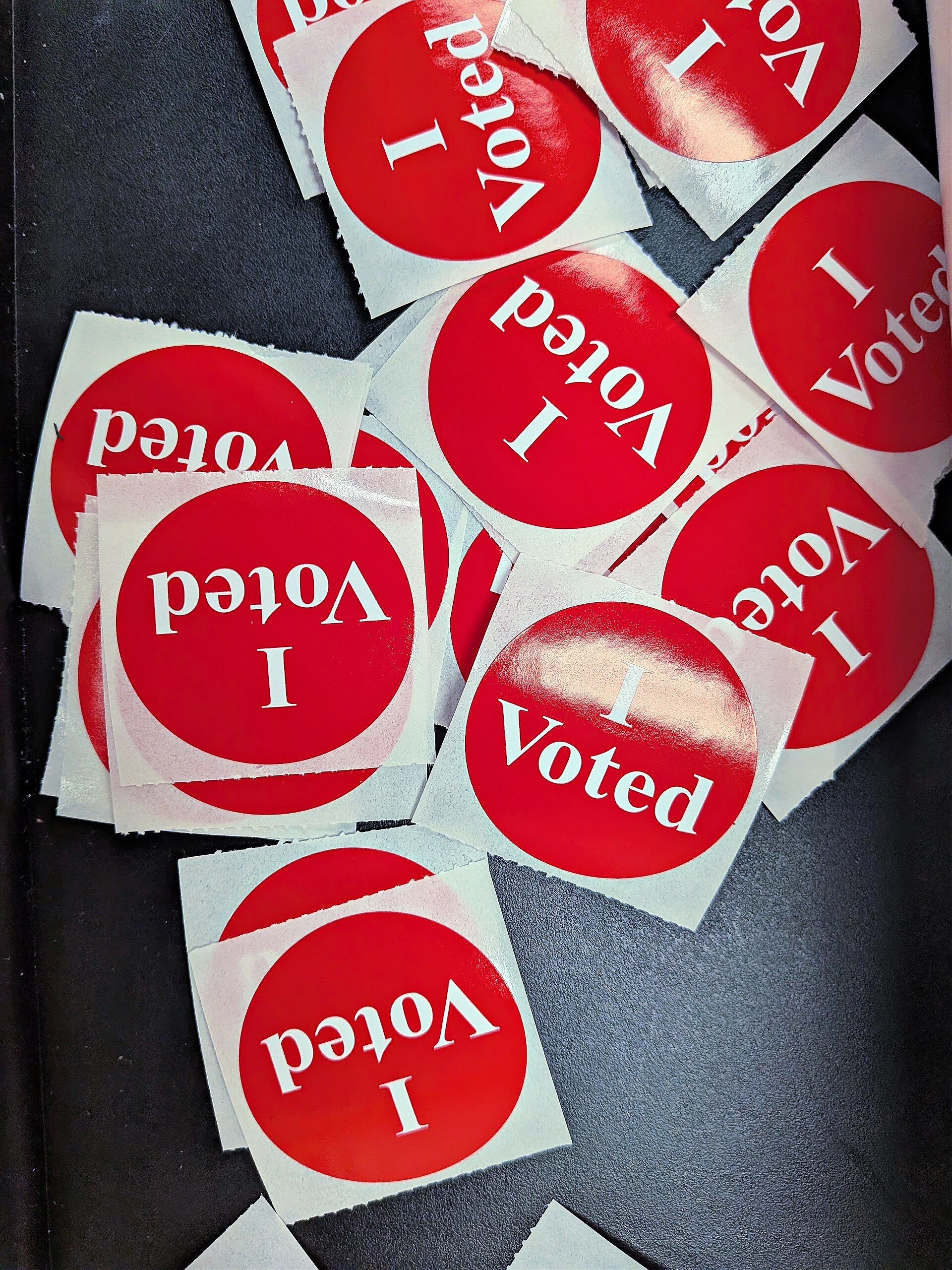
What can actually be done
The institutional answer, briefly
The institutions are, so far, holding better than the headlines suggest. The documentary proof provisions of the 2025 order are permanently enjoined. The 2026 order is enjoined in twenty-three states and the District of Columbia, and the First Circuit refused to disturb that. The nationwide use of the modified SAVE system is blocked. Courts have thrown out the voter file demands in states led by both parties. A Trump-appointed judge quashed the Fulton County subpoena. Twenty-five states are litigating the FEMA conditions. The SAVE America Act has not passed the Senate. None of that is a prediction about what happens next, and the Supreme Court application pending right now could change part of the picture within weeks. It is simply the state of the record.
Those cases are being carried by state attorneys general and by voting rights organizations, and they will keep going regardless of what any of us do. The rest of this section is the part that depends on you.
If you are a United States citizen, here is your list of things to actually do
Check your registration now, today, on your state election office's website. Then check it again after the registration deadline passes, and again before you vote early. It takes four minutes, and it is the specific defense against the specific mechanism described above. A problem you find in August is far easier to sort out. The same problem discovered on November 3 may be impossible to fix in the time remaining.
If you are a naturalized citizen, or you were born abroad to American parents, or your current legal name is not the name on your birth certificate, take one additional step. Make sure your name and citizenship status are consistent across your Social Security record, your driver's license, your passport if you have one, and your voter registration. Mismatches between those systems are what generate false flags. Keep your certificate of naturalization or certificate of citizenship somewhere you can find it, along with certified copies of whatever document bridges your names, meaning a marriage certificate, divorce decree, court name change order, adoption order, or corrected birth certificate. Do not carry the originals of irreplaceable documents around with you, and do not hand originals to anyone who is not required to receive them. If you can afford one, get a United States passport, which is often the strongest single proof of citizenship document and the easiest one to replace.
If you are told at the polls that there is a problem with your registration, do not leave. Ask for a provisional or affidavit ballot, cast it, and ask for written instructions on how to cure it and by what deadline. Cure rules and deadlines vary considerably from state to state and some of them are very short, so get the instructions in writing and confirm the deadline with your county board the same day. A provisional ballot that you properly cure may be counted. Walking out preserves nothing at all.
If you see immigration agents at or near a polling place, document, do not confront. From a place you are lawfully entitled to be, note the time, the location, what agency markings and badge numbers are visible, whether they are armed, whether they entered the polling place, what they said, and what they did. Report it to the site coordinator, to your county board of elections, and to your state's chief election official. If anyone is being intimidated, report it to the Justice Department's voting section. If there is violence or an immediate threat, call local police first. Do not interfere with agents, and do not tell anyone else to; that helps nobody and can put you in real jeopardy.
If you have immigrants in your family or your community
Say the true thing out loud, and say it early. Tell the citizens in your family that they should vote and that a rumor is not a reason to stay home. Tell the noncitizens in your family, clearly and more than once, that they must not vote and must not register, and that this is not a technicality. Both halves of that message have to travel together, because a family that only hears the second half stops participating altogether, and a family that only hears the first half can lose a green card.
Offer the rides. In a mixed-status household the person least likely to vote is often the citizen who does not drive, or who will not go alone. A neighbor with a car can solve a practical problem that no lawsuit is going to solve in time.
If someone tells you their registration was cancelled or challenged, do not assume they did something wrong. Given the documented error rates, one entirely plausible explanation is that a federal database could not confirm a naturalization it did not have updated. Help them find the notice, read the deadline, and get the document. If there is any immigration history involved at all, and especially if any voter registration form was ever signed, talk to an immigration lawyer before responding to anything.
Serve as a poll worker. This is the least glamorous item here and possibly the most important one. Election offices are losing experienced people, partly because of the federal criminal exposure described earlier, and the counties doing the actual work of verifying flagged registrations are short-staffed. Bilingual poll workers are in particular demand. If you speak Spanish, Haitian Creole, French, Mandarin, Russian, Sinhala, or Tamil, your county wants you.
The obligation
The last point is not legal advice.
A democracy does not have an immune system. It has people who do small, boring, procedural things at the right time, or it does not. None of the machinery described above is self-executing. Checking early is what keeps a database error from quietly becoming a lost vote. The chilling effect works best on households nobody talked to. The staffing shortage at your county board of elections is a shortage of specific individuals who did not sign up. Every one of the mechanisms above works better when ordinary people are too busy, too discouraged, or too frightened to take four minutes.
If you are a citizen of this country, whether you were born here or whether you raised your hand in a ceremony and swore an oath, you hold something that most of our clients have spent years and everything they have trying to obtain, and that many of them will never get. Some of them are not going to be able to protect themselves this year. You can protect yourself, and you can carry some of them. Check your registration. Vote. Take somebody with you.
If you need us
If you are not a citizen and you think you may have registered to vote or voted, at any point, for any reason, including because someone at a government office handed you a form, call us before you do anything else. Do not go explain it to an agency. Do not file anything to fix it. Those cases are difficult and they get much more difficult after you have talked to the government without counsel. We have handled this before.
If your registration was cancelled or flagged and you are a naturalized citizen, that is an election law problem more than an immigration one, and your county election office and your state's chief election official are the right first calls. If the flag came with any suggestion that your naturalization itself is being questioned, that is an immigration law problem, and you should speak with immigration counsel promptly.
Free consultation, in English, Spanish, French, Haitian Creole, or Mandarin. Something is keeping you up at night. Let's talk about it.
Sources
Every factual assertion in this post is drawn from the sources below. Where we have characterized something as unverified, contested, or as an inference, we have said so in the text. Source titles are given in their original language so that readers can locate them. This post is current as of July 31, 2026, and several of these matters are moving quickly.
Statements of purpose
Democracy Docket, Trump: 'We should take over the voting' (Feb. 2, 2026) (source of the quoted Bongino Show remarks). Votebeat, What Trump's call to 'nationalize the voting' could mean for the 2026 elections (Feb. 9, 2026). Democracy Docket, 'We want to take over': All the (recent) times Trump has talked about controlling elections. Reuters, "Trump says Republicans should 'nationalize' voting in at least 15 places" (Feb. 2, 2026). Mediaite, Trump Vows Republicans 'Will Not Lose an Election for A Hundred Years' (July 2026). Democracy Docket, 'Anything necessary': Trump won't rule out sending troops to polls (May 12, 2026).
On the draft emergency order: Democracy Docket, Read a draft of the emergency executive order for Trump to take control of elections (Feb. 27, 2026) (including the White House denial), and Top Democrats, voting rights experts slam Trump's draft illegal order to seize control of voting.
The SAVE America Act
S. 1383, Safeguard American Voter Eligibility Act / SAVE America Act, full text. Congressional Research Service, Safeguard American Voter Eligibility Act (SAVE America Act) and Federal Voter Registration Policy and Law. Center for American Progress, The SAVE America Act Explained. Brennan Center, The SAVE Act and the Election Power Grab. Campaign Legal Center, What You Need to Know About the SAVE Act. Reuters, "How Trump's long-shot voting bill could hurt his own supporters" (Mar. 17, 2026). Votebeat, Despite the SAVE America Act stalling in Congress, Trump is shaping state election policy (Mar. 30, 2026).
The executive orders and the litigation
Executive Order 14248, "Preserving and Protecting the Integrity of American Elections" (Mar. 25, 2025), Federal Register. Executive Order 14399, "Ensuring Citizenship Verification and Integrity in Federal Elections" (Mar. 31, 2026), American Presidency Project and Federal Register text. Civil Rights Litigation Clearinghouse, League of United Latin American Citizens v. Executive Office of the President, No. 1:25-cv-00946 (D.D.C.). Elias Law Group, Federal Court Permanently Blocks Additional Provisions of President Trump's Executive Order on Elections. Brennan Center, Status of Trump's 2025 Anti-Voting Executive Order. Votebeat, Trump issues executive order giving U.S. Postal Service oversight over mail voting in 2026 election (Mar. 31, 2026). Civil Rights Litigation Clearinghouse, State of California v. Trump, No. 1:26-cv-11581 (D. Mass.). Supreme Court of the United States, Trump v. California, No. 26A124, application for stay (filed July 27, 2026), and California v. Trump, No. 26A139, state defendants' stay application (filed July 29, 2026).
The SAVE database and wrongful flagging of citizens
Brennan Center, Watch Out for False Voter Fraud Claims Fueled by the SAVE Program (source for the Boone County, St. Louis County, Utah, and Louisiana figures). Fair Elections Center, Issue Brief: Examining Changes to USCIS's SAVE System. Campaign Legal Center, What Is the SAVE System?. National Immigration Law Center, FAQ: Navigating the DHS SAVE System. American Immigration Council, The Systematic Alien Verification for Entitlements (SAVE) Program: A Fact Sheet. Votebeat, Texas officials confirm that some registered voters flagged as potential noncitizens by SAVE had already provided proof of citizenship (July 30, 2026). Texas Tribune, Texas finds some registered voters wrongly flagged as noncitizens (July 30, 2026). Texas Tribune and ProPublica, Trump's SAVE tool keeps mistakenly flagging voters (Feb. 13, 2026). Indiana Capital Chronicle, Longtime citizen flagged, voter registration revoked in proof-of-citizenship ordeal (July 2, 2026), and Indiana SOS signs federal agreement to identify noncitizens on voter rolls. Indiana Lawyer, Judge blocks use of federal database to check citizenship, saying it could wrongly purge voters (reporting the June 22, 2026 ruling in League of Women Voters v. DHS). PolitiFact, Is the federal SAVE tool booting naturalized citizens from voter rolls? (Feb. 20, 2026).
Federal pressure on state election officials
NBC News, DOJ threatens prosecution of state election officials over noncitizen voting. Votebeat, Department of Justice warns election officials they could be prosecuted (July 7, 2026). Democracy Docket, DHS Secretary Mullin threatens to prosecute election chiefs who refuse voter roll demands. ABC News, Mullin threatens to withhold aid from states that don't comply with DHS election directives. Brennan Center, Tracker of Justice Department Requests for Voter Information. Reuters, "Trump push for state voter rolls rebuffed by courts as midterms near" (Apr. 28, 2026), and "How Trump is moving to control U.S. elections, one state at a time" (Apr. 27, 2026).
Conditioning homeland security money on election policy
Department of Homeland Security, DHS Requires States to Adopt Common-Sense Election Security Measures Before Receiving Federal Funds (July 10, 2026). Votebeat, Democratic states, officials sue Trump administration for tying FEMA grants to election policies (July 24, 2026). CBS News, 25 states sue FEMA and DHS, accusing Trump administration of withholding funding. Rhode Island Attorney General, Attorney General Neronha co-leads lawsuit to stop unlawful conditions on critical emergency grants (July 23, 2026).
The Election Assistance Commission and election security capacity
Votebeat, Trump fires Election Assistance Commission members, leaving agency unable to act (July 9, 2026). CNN, Trump fires Election Assistance Commission leaders. NBC News, Trump ousts remaining members of the Election Assistance Commission ahead of midterms. ProPublica, Trump Pushes Out Last Federal Election Assistance Commission Members. Democracy Docket, Trump fired the entire Election Assistance Commission. Now what?. Reuters, "Trump officials sought ways to sidestep election agency before firings, sources say" (July 11, 2026). Brennan Center, How the Federal Government Is Undermining Election Security. Votebeat, Cuts to federal election security funding leave officials in a tight spot and Election officials say trust with CISA on election security is broken. Nextgov, Trump proposes cutting CISA election security program in FY27 budget.
Criminal-investigative pressure on election workers
The Hill, Judge quashes DOJ subpoena for names of Fulton County's 2020 election staff. ABC News, Judge's ruling in Georgia election case is latest setback for Trump DOJ. CNN, Justice Department warns state election officials of criminal charges as administration's probe faces loss. CBS Atlanta, Fulton County celebrates court victory after judge quashes DOJ subpoena for 2020 election workers' personal data. Reason, A Trump-appointed judge quashes a subpoena aimed at validating the president's stolen-election fantasy (July 8, 2026) (quoting Judge William M. Ray II).
DHS, ICE, and polling places
Votebeat, Trump official: No ICE agents at polling places in 2026 election (Feb. 26, 2026). Brennan Center, Sending ICE to Polling Places Is Illegal. Axios, Todd Blanche won't rule out ICE, federal agents at polling places (July 15, 2026). Democracy Docket, Blanche says he will 'follow the law' on ICE agents at polls but won't pledge not to deploy them and Deputy attorney general endorses sending ICE agents to voting sites. Democracy Docket, ICE reverses, admits it may have trove of documents on agents at polling places, and case page, Federal Election Interference Records Challenge. Rep. Raja Krishnamoorthi, Krishnamoorthi Demands Answers on Reports DHS May Deploy ICE Near Polling Places (June 2026). On the appointment and background of the DHS deputy assistant secretary for election integrity: Votebeat, Activist Heather Honey appointed to Homeland Security election post; ProPublica, reporting on Heather Honey and DHS election security; WHYY, Researcher who distorted voter data appointed to federal election integrity role.
Denaturalization
Transactional Records Access Clearinghouse, Denaturalization Lawsuits Jump in May and June 2026. Congressional Research Service, Denaturalization: A Brief Overview of the Current Legal Framework. Migration Policy Institute, From Last Resort to Intimidating Enforcement Tool: Denaturalization in the Trump Era. Immigration Policy Tracking Project, USCIS reportedly set to escalate denaturalization case referrals.
Redistricting
Ballotpedia, Redistricting ahead of the 2026 elections. National Conference of State Legislatures, Changing the Maps: Tracking Mid-Decade Redistricting. Reuters, "US Supreme Court revives pro-Republican Texas voting map" (Dec. 4, 2025). Wikipedia, 2025–2026 United States redistricting (useful as a dated index of enacted maps; verify against the Ballotpedia and NCSL trackers above). On Alabama: SCOTUSblog, Supreme Court permits Alabama to use congressional map struck by lower court as racially discriminatory (June 2, 2026); NPR, The Supreme Court reinstates Republican-favored Alabama congressional districts. On Virginia: Ballotpedia News, Virginia Supreme Court voids election results for Virginia redistricting referendum (May 8, 2026); SCOTUSblog, Court denies Virginia's request to reinstate congressional map.
How rare noncitizen voting actually is
Reuters investigation, "Trump claims voting by noncitizens is rampant in America. The numbers tell another story" (July 19, 2026) (source for the 129 federal charges since 1996, the 73 convictions or guilty pleas, the finding that 49 of the 62 people whose status could be determined were lawful permanent residents, and the 39 prosecutions in the preceding 18 months). Minnesota Lawyer, Prosecutors struggle to turn voter fraud claims into charges (July 24, 2026). Brennan Center, Noncitizen Voting Isn't Affecting State or Federal Elections.
The law governing noncitizen voting and voter intimidation
18 U.S.C. § 611 (voting by aliens). 18 U.S.C. § 1015 (false claim of citizenship to register or vote, subsection (f)). 8 U.S.C. § 1227(a)(6) (INA § 237(a)(6), deportability for unlawful voting) and 8 U.S.C. § 1227(a)(3)(D) (false claim to citizenship). 8 U.S.C. § 1182(a)(10)(D) (INA § 212(a)(10)(D), inadmissibility for unlawful voting) and 8 U.S.C. § 1182(a)(6)(C)(ii) (false claim to citizenship). Matter of Fitzpatrick, 26 I&N Dec. 559 (BIA 2015). Congressional Research Service, Immigration Consequences of Unlawful Voting by Aliens. Catholic Legal Immigration Network, Intent is Irrelevant to Unlawful Voting. 18 U.S.C. § 592 (troops at polls). 18 U.S.C. § 594 (intimidation of voters). 52 U.S.C. § 10307(b) (Voting Rights Act section 11(b)). 52 U.S.C. § 20511 (National Voter Registration Act criminal penalties).
Where noncitizens may lawfully vote in local elections
Ballotpedia, Laws permitting noncitizens to vote in the United States. Bipartisan Policy Center, Four Things to Know about Noncitizen Voting.
Attorney Advertising. This post is general information about the law and about publicly reported events. It is not legal advice, and reading it does not create an attorney-client relationship. Prior results do not guarantee a similar outcome. Immigration consequences depend entirely on the specific facts of an individual case, and the law described here is changing rapidly. If any part of this affects you, speak with a lawyer about your own situation.
எழுதியவர்
Joshua E. Bardavid
Immigration attorney at Bardavid Law, P.C. with years of experience helping clients navigate the U.S. immigration system.